
Environment
Environment: comfort, efficiency and responsible resource use
For Beretta, caring for the climate at home means developing comfort solutions that help users make more conscious use of energy. This commitment is complemented by attention to packaging and corporate initiatives aimed at more responsible resource management within their respective areas of application.
Comfort solutions
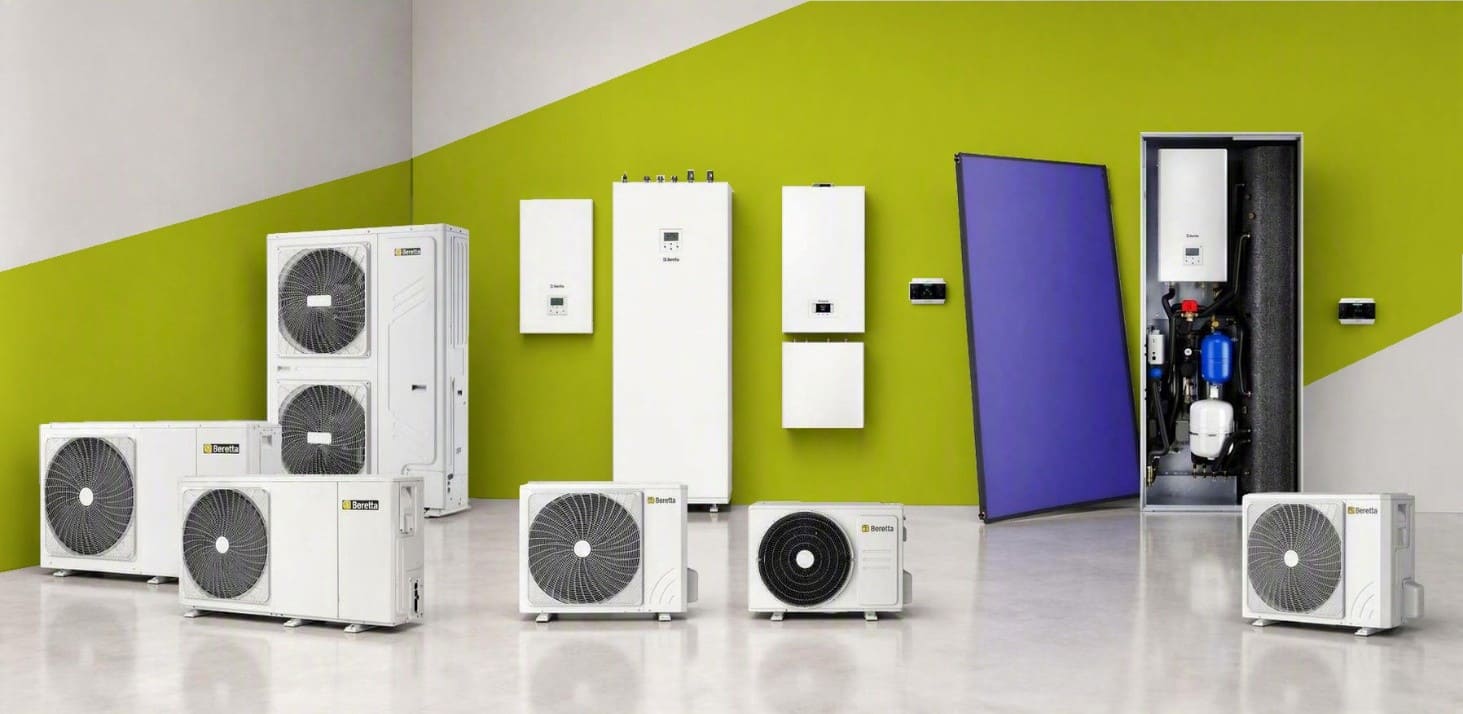
From heat pumps and hybrid systems to condensing boilers and solutions designed to operate with hydrogen blends of up to 20%, the Beretta range offers a variety of options to meet comfort, efficiency and system integration needs.
Efficiency and energy consumption control
In some Beretta solutions, features such as control and remote management, together with components such as low-consumption circulators, wide modulation ratios and heat exchangers designed to product specifications, can support more efficient energy use.
When correctly integrated and configured, they help users and professionals manage the system according to the characteristics of the home and actual comfort needs.
Recyclability and end of life of condensing boilers

Energy-efficiency
Energy savings due to high 1:8 modulation ratio and steel primary and sanitary exchangers developed to offer high performance

Hydrogen Blended
It is ready to run up to 20% hydrogen blended with natural gas



Reciclability
Reciclability of 90%
(It concerns the Power EVO X product range of high power condensing boilers)
Reciclability of 81,56%
(It concerns the Residence and Start product range of condensing boilers)
Reciclability of 78%
(It concerns the Residence HM product range of condensing boilers)
EXTENDED RECYCLABILITY OF THE INTERNAL COMPONENTS OF A CONDENSING BOILER.
 In an independent study conducted by Ecoped, the Italian Consortium for the Management of Waste Electrical and Electronic Equipment (WEEE), Batteries and Accumulators (Ri.P.A.) and Sports and Leisure Equipment, on a condensing boiler Model 20139525 Residence 25 Kis*, the recyclability index was calculated on the boiler's internal components. The model examined received a certification of a recyclability index of 81.56%**, an indicator that expresses the degree of recovery of materials, the so-called Secondary Raw Materials (Materie Prime Secondarie - MPS), useful for being reused in the manufacture of new goods and thus reducing the environmental impact.
*The boiler under study is a DOMESTIC EEE belonging to Grouping R4 of the WEEE regulations according to Il D.Lgs. 49/2014, the result of the transposition in Italy of Directive 2012/19/EU.
** The study considers different recyclability indices of the boiler from 81.56% up to 92%, based on assumptions of disposal of the 10 constituent assemblies of the boiler according to the DOMESTIC WEEE management chain. The boiler demonstrated a theoretical recyclability index of up to 92%, considering a recovery of homogeneous batches of boilers of the same type with process technologies capable of recovering, as much as possible, all or almost all types of materials. Considering, on the other hand, the actual recyclability index, which takes into account the best available process technologies used by treatment and recovery plants and the heterogeneity of the batches, in fact consisting of WEEE of different types belonging to the R4 grouping to which the boilers belong, the index is 81.56% (this value is subject to change depending on the evolution of the best available technologies and the higher or lower degree of homogeneity of flows and supply chains).
The models below have an equivalent recyclability index to the model under study, based on the same boiler's internal components:
20187761 CIAO X 25C
20187764 CIAO X 25C GPL
20187765 CIAO X 30C
20187766 CIAO X 15R
20187767 CIAO X 25R
20188714 QUADRA X 25C
20188715 QUADRA X 30C
20188717 QUADRA X 25R
20194596 CIAO X 25C
20194597 CIAO X 30C
20195535 CIAO X 30R
20197875 CIAO X 25C
20197876 CIAO X 30C
20197877 CIAO X 25C GPL
20189653 MYNUTE X BOX 25C
20189654 MYNUTE X BOX 30C
20197310 MYNUTE X BOX 30R
20197308 MySMART X 25C
20197309 MySMART X 20R
20191298 METEO X 25C
20191299 METEO X 30C
20229660 MYNUTE SPECIAL X 30C
20230282 MYNUTE SPECIAL X 30R
20229809 MYNUTE SPECIAL X 25C
The recyclability index of the following new boiler models:
20205312 MYNUTE EVO X 25C
20205313 MYNUTE EVO X 30C
20205314 MYNUTE EVO X 35C
20205315 MYNUTE EVO X 20R
20205316 MYNUTE EVO X 30R
20206141 EXCLUSIVE EVO X 25C
20206142 EXCLUSIVE EVO X 30C
20206143 EXCLUSIVE EVO X 35C
20206144 EXCLUSIVE EVO X 25R
20206145 EXCLUSIVE EVO X 35R
It is 78 % and was calculated based on internal estimates and taking as reference Model 20139525 Residence 25 Kis* above.
The recyclability index of the following new high power condensing boilers models:
20190069 POWER EVO-X 50 DEP
20190070 POWER EVO-X 50
20190072 POWER EVO-X 65
20190073 POWER EVO-X 80
It is 90% and was calculated based on internal estimates and taking as reference Model 20139525 Residence 25 Kis* above.
Packaging
Approach to product packaging
Responsible resource use also extends to packaging.
For certain Beretta product lines or specific types of packaging, the solutions adopted may include FSC-certified cardboard, reduced use of plastic components, instructions for correct disposal, and configurations designed to support more orderly management of volumes and logistics.
Approach to spare parts packaging
For spare parts packaging, standardising package dimensions can contribute to more orderly management of transport volumes.
Labels and opening systems also support the identification, traceability and integrity of genuine spare parts. The characteristics described apply exclusively to packaging or product lines for which verified technical and commercial information is available.
Corporate activities
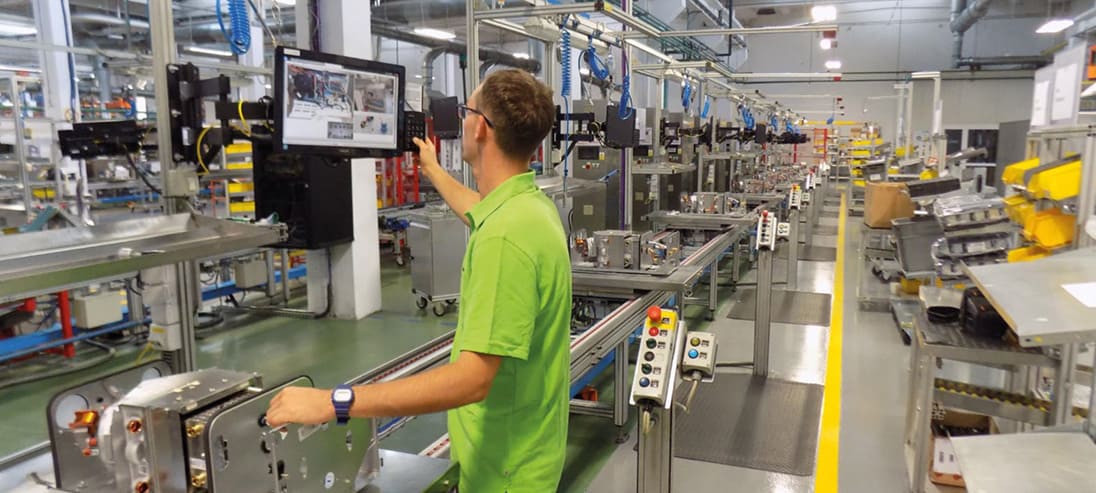
Responsible resource use is also reflected in day-to-day activities across production sites, offices and corporate processes.
Separate waste collection, organisation of waste streams, monitoring of energy and water consumption, and internal awareness initiatives can help promote more conscious behaviour and more responsible resource management in the contexts where these practices are adopted.
 Contact Us
 Sales Network